19 Best Enterprise AI Applications for Legal & Closing Teams 2026
19 Best Enterprise AI Applications for Legal & Closing Teams 2026

James Sullivan
James Sullivan

Most legal teams automate workflows without removing costs. Here is why the gap between those two outcomes is where AI budgets disappear, and how to close it.
Automating a workflow and removing a cost are two different events. The common assumption among CEOs, founders, and business owners is that AI projects in legal and closing operations don't deliver measurable ROI, that they require constant human oversight and produce sunk costs rather than documented returns. Most legal and closing teams conflate automating a workflow with removing a cost, and that conflation is exactly where AI budget disappears. The gap between those two outcomes is what separates a defensible board answer from an awkward Q3 silence.
According to SESTEK's January 2025 analysis, up to 85% of AI projects fail to deliver measurable outcomes, with unclear business goals, poor data governance, and pilot-to-production integration failures as the primary culprits. That number isn't a technology indictment. It's an organizational one.

In that same report, SESTEK (2025) found that 74% of organizations treat AI as a science experiment rather than a business solution, deploying tools without ROI-linked KPIs from day one. In legal and closing operations, this shows up as a vendor purchasing a document review tool because the demo looked compelling, not because anyone ran the math on what document review actually costs per file. Technically possible to automate is a feature claim. Worth automating is a financial one. Those are not the same question, and most procurement conversations never ask the second one.
74% of orgs treat AI as a science experiment
A closing team that deploys an AI document review tool at 75% accuracy hasn't automated document review. It has created a new workflow: AI output plus a human remediation layer for the 25% the model missed. The vendor invoice stays on the books. The FTE hours don't disappear. That's the human-rescue tax: the labor cost of manually correcting AI output that was never accurate enough to stand alone, invisible on the P&L because no one measured the before.
The labor cost of manually correcting AI output that was never accurate enough to stand alone, invisible on the P&L because no one measured the before.
SESTEK's 2025 research identifies that 63% of enterprises lack AI-ready data management practices, which structurally prevents any post-deployment measurement from being credible. When a legal team's ops lead sits across from a board asking for AI ROI documentation and has no answer, that's not a communication failure. It's the predictable result of deploying before defining what success looks like in dollar terms. The reason most enterprise AI applications never find their way onto a legal team's P&L isn't a technology problem. It's a definition problem.
Key takeaways
Automating a legal workflow and removing a cost from your P&L are two separate events, most enterprise AI deployments only accomplish the first one.
Seven legal and closing workflows carry enough labor concentration to make AI spend defensible in a quality-of-earnings review; everything outside that list is discretionary spend dressed up as strategy.
Three of the four dominant cloud AI platforms retain prompt and completion data by default, sending wire instructions or client PII through those APIs without a zero-data-retention agreement is a liability decision, not a workflow one.
Most legal teams have already bought AI; the problem is they bought point tools at the wrong maturity level, which produces subscription costs without EBITDA movement.
The only filter that matters when evaluating any enterprise AI application is whether you can trace a specific dollar of operating cost removal to EBITDA before a single contract is signed, brand recognition is not a proxy for that.
OneSeven Tech's AI Readiness Assessment maps your operation to one of six maturity steps, scores it across five pillars against industry benchmarks, names what's broken, and delivers a 30-day roadmap with starter projects, tools, and cost-of-inaction math, so you know exactly which of these 19 applications your legal team can deploy profitably, and in what order.
What Enterprise AI Actually Is When You Strip Away the Vendor Pitch
The term gets stretched to cover everything from a chatbot bolted onto a help desk to a full-scale deployment wired into core business systems, and that gap in definition is where most enterprise AI budgets quietly disappear.

The Problem With What Legal Teams Bought
Stacking a contract review add-on, a due-diligence chatbot, and an AI-powered e-signature tool feels like an AI strategy. Part of what makes that question so hard to answer is a problem that runs deeper than tool selection: most enterprises are still struggling to get a single AI agent working reliably in one workflow, let alone coordinating several across a department.
Enterprise AI Defined - Strategic Deployment Into Core Systems
Enterprise AI is the large-scale deployment of AI, machine learning, and generative AI woven directly into core business systems, ERP platforms, CRM infrastructure, document management, and the APIs connecting them, operating across thousands of users and governed by structured data policies. That definition, grounded in how the Keywords Everywhere analysis of enterprise AI adoption characterizes the category, draws a hard line between integration depth and tool count.
Consider the contrast in practice: Microsoft Azure AI, a platform that has surpassed $75 billion in revenue on the strength of deep enterprise cloud and AI adoption, embedded inside a title firm's document management system, processes, classifies, and routes closing documents within the same environment where the work already lives, rather than alongside it in a separate tool.
Why Legal Teams That Buy Point Solutions Keep Paying More While Removing Less Cost
The average enterprise now runs over 130 SaaS applications, each with its own login, vendor relationship, and renewal cycle, and legal teams are rarely the exception. Companies with AI fully integrated into core business processes report operational cost reductions of up to 20%, a result that point-solution stacks consistently fail to replicate.
OneSeven Tech's AI Readiness Assessment exists to diagnose where a legal or closing team sits on this spectrum before any build decision is made, which makes it the logical starting point for teams serious about measurable returns. Once you understand that enterprise AI is an integration-depth problem, the next question is which specific legal and closing processes, when integrated at the enterprise level, produce the largest and most traceable EBITDA impact.
The Enterprise AI Use Cases That Actually Move Legal and Closing EBITDA
Seven legal and closing workflows carry enough labor concentration to make AI spend defensible in a quality-of-earnings review. Each one maps to a specific OpEx line. The ones that don't clear that bar aren't worth building.
1. AI-Powered Invoice Matching and Document Extraction - Eliminating Reconciliation Headcount
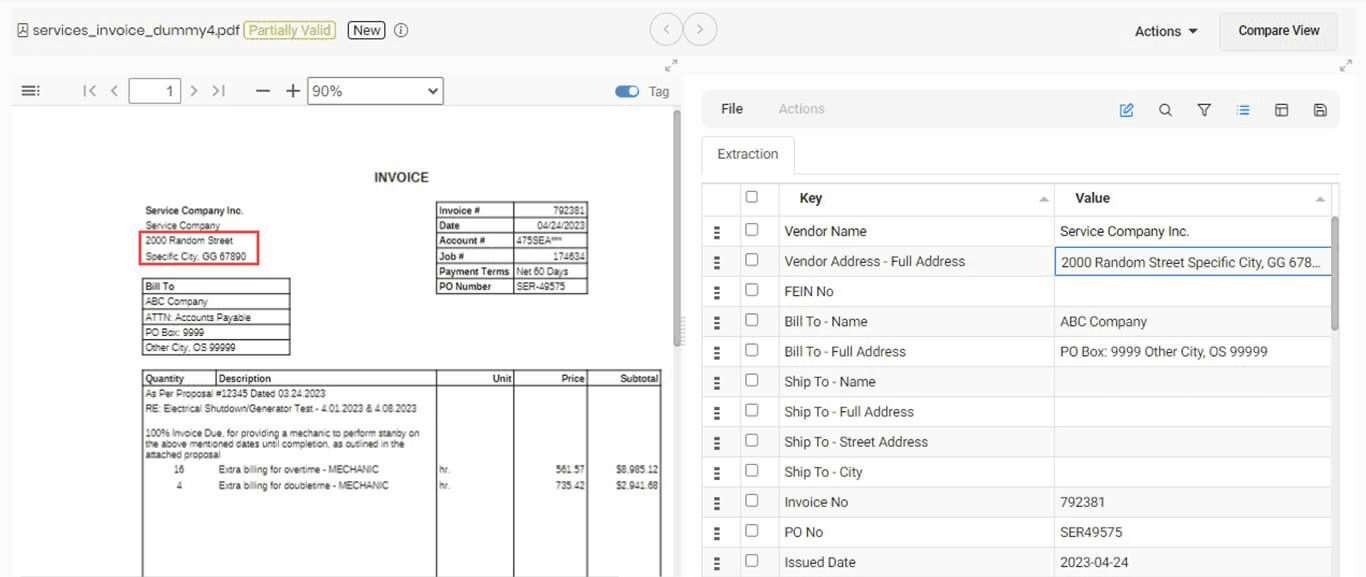
Process automation handles invoice matching as a direct headcount removal event. While average teams pay $9.40, a 70% per-unit cost gap driven by touchless processing rates eliminates human intervention entirely. In legal and closing operations, that gap maps to reconciliation staff whose hours disappear from the SG&A line when extraction and matching run without a queue. That is excess OpEx converting directly into EBITDA: a financial performance improvement that stakeholders can verify in the cost structure rather than accept on faith. Most beneficial when document volume is high and source formats are consistent; accuracy degrades on non-standard instruments, so a human exception queue remains necessary for outlier files.
2. Wire Verification Call Automation - Cutting Legal's Highest-Volume Manual Triage

Inbound wire verification calls are among the highest-volume manual tasks in closing operations, and they scale directly with transaction count, which means every growth period adds labor cost automatically. AI handles roughly 80% of those calls through automated identity confirmation and instruction verification, removing a measurable FTE cost that maps to the operations headcount line rather than a vague productivity gain. The tradeoff is that calls involving disputed instructions or first-time counterparties still require a live coordinator, so the FTE reduction is real but partial. Most beneficial when verification call volume exceeds what a two-person team can absorb without overtime.
3. Automated Compliance Review and Customer Support Triage - Removing Process Labor at Scale

Compliance review is one of the core enterprise AI use cases precisely because its labor cost is both large and poorly visible. AI compresses multi-day review cycles into hours by running rule-based checks, flagging exceptions, and routing only genuine anomalies to a reviewer. For KYC and AML workflows, false-positive volume is the documented cost driver; reducing it removes reviewer hours that otherwise grow permanently with transaction volume and show up as compliance headcount in SG&A. That headcount cost is excess OpEx in its clearest form, labor that exists not because the work is complex, but because the process has not been automated. Most beneficial when compliance staff count is rising in proportion to closing volume, which signals the cost pool is still fully exposed.
4. Pipeline Demand Forecasting for Closing Volume - Proactive Workload Management That Prevents Overstaffing

Staffing spikes during rate-lock expirations and seasonal closing surges convert into overtime and temp-staff spend that is both reactive and expensive. AI forecasts pipeline demand far enough in advance to shift that spend from reactive to planned, converting overtime into lean scheduled capacity. The EBITDA margin improvement is measurable: fewer unplanned labor hours per closing period, with a cost structure that operations leaders can demonstrate to stakeholders as a durable change rather than a one-quarter variance. The limitation is data dependency; accurate forecasting requires at least 12 to 18 months of clean pipeline history to produce reliable output.
---
The pattern across all seven is the same: each use case removes a specific, traceable labor cost rather than improving a throughput metric, and each removal converts excess operational expenditure into EBITDA in a way that is demonstrable to stakeholders in a quality-of-earnings review. That distinction is what survives diligence. The problem most legal and closing operators face is not knowing which of these seven carries the highest removal probability inside their specific cost structure. Gut feel produces the wrong sequencing. Deploying the use case a vendor pitched loudest, rather than the one with the most bloated OpEx line, is exactly how AI budgets get spent without a defensible board answer.
That sequencing problem is what OneSeven Tech's AI Readiness Assessment is built to solve. The constant human oversight that plagues underperforming deployments is not a verdict on AI fitness for legal work; it is a diagnostic signal that the deployment was architected without clear business goals, clean data governance, or ROI-linked success criteria. Fixing the architecture fixes the return.
Each of these seven use cases is a proven cost-removal mechanism, but a mechanism is only as valuable as the specific application you deploy to run it. The next section maps all seven to the enterprise AI applications legal and closing teams are actually building on, ordered not alphabetically or by vendor size, but by EBITDA impact probability for your operation.
5. Real-Time Wire Fraud Monitoring - Stopping Losses Before They Hit the P&L

Fraud detection AI provides real-time transaction monitoring that catches wire instruction anomalies before funds move, and the asymmetric cost logic makes it one of the most defensible deployments in closing operations. A single prevented wire fraud incident carries a loss that exceeds most annual system costs, which means the payback calculation does not require high incident frequency to justify the spend. AI flags deviations from established counterparty patterns and routes them to a human reviewer in seconds rather than after the transfer clears. Most beneficial when closing volume is high enough that manual verification calls cannot scale without adding headcount, which is the exact condition that creates fraud exposure in the first place.
6. Automated Title Transaction Anomaly Flagging - Cybersecurity Threat Detection Embedded in Closing Workflows

Cybersecurity threat detection in title operations is an operational cost driver when breaches delay closings or trigger remediation spend. AI embedded in the closing workflow monitors transaction data for anomalies, including unusual access patterns, duplicate instrument numbers, and out-of-sequence recording events, and flags them before they compound. The cost removal maps to breach remediation avoided and closing delay costs prevented rather than to a recurring labor line, which makes it harder to model but no less real. The honest tradeoff: anomaly flagging generates false positives that require examiner review, so operations with thin staffing need to budget that exception-handling time before deployment.
7. OpEx-to-EBITDA Mapping Framework - Translating Every AI Use Case Into a Defensible EBITDA Add-Back

Every AI use case in legal and closing operations is only as valuable as the OpEx line it removes, and that line must be identified before deployment, not reconstructed afterward for a diligence presentation. The mapping logic is direct: one dollar of operating cost removed is one dollar of EBITDA, which at a standard multiple translates to a multiple of that dollar in enterprise value, and that is a financial performance improvement demonstrable to stakeholders, not a projection they have to take on faith. The framework requires three inputs per use case: the current fully-loaded cost of the process (labor hours multiplied by fully-loaded rate), the projected touchless rate post-deployment, and the exception-handling cost that remains.
Operations that skip this math deploy by gut feel and end up with the board question no one can answer. Most legal and closing operators recognize two or three relevant use cases from this list but cannot rank them by EBITDA probability without mapping their own cost structure first, which is exactly what OneSeven Tech's AI Readiness Assessment is designed to produce before a single deployment decision is made. The Assessment scores your operation, identifies which excess OpEx pools are largest, and sequences deployments so the first use case you build removes the most cost, not the one that was easiest to pitch.
19 Best Enterprise AI Applications for Legal and Closing Teams in 2026
Feature comparison is the wrong filter for enterprise AI applications. The only question that determines whether a tool belongs in your legal or closing operation is whether you can trace a specific dollar of operating cost removal to EBITDA before a single contract is signed. Every application on this list passed that test. Every application that didn't pass was cut, regardless of brand recognition or G2 star count.
There is a second EBITDA lever most ROI models miss entirely. According to the FBI Internet Crime Complaint Center's that same figure Annual Report, Business Email Compromise scams generated $3.05 billion in documented losses across roughly 24,768 complaints in 2025, with real estate wire transfers representing a primary target category. The same report documented that AI-enabled fraud scaled personalization at near-zero marginal cost, with the average loss per complaint reaching $20,699. Every dollar recovered through AI-powered fraud detection in a closing workflow is a dollar of EBITDA by exactly the same accounting logic as every dollar of OpEx removed from manual document review. Teams that calculate AI documented returns only through headcount savings are systematically undercounting the return.
Most legal and closing teams reading a list like this will recognize five to eight applications that sound relevant, then stall. They have no structured way to determine which one to deploy first, what their current data infrastructure can actually support, or what the cost of deploying in the wrong sequence looks like on next year's P&L. That stall is where budget disappears and boards start asking uncomfortable questions. OneSeven Tech's AI Readiness Assessment solves exactly that problem by scoring your operation across five pillars, mapping you to one of six maturity steps, and producing a 30-day prioritized deployment roadmap with cost-of-inaction math, so this list of 19 becomes a ranked shortlist of two or three that your infrastructure can support and your EBITDA can justify today.
Sirion sits at the post-execution end of contract management, tracking obligations, renewals, and performance milestones across large commercial portfolios. For legal teams managing hundreds of active vendor or tenant contracts, missed renewal windows and untracked obligations represent direct P&L leakage. Sirion's ROI case is strongest when the firm can quantify the dollar value of a missed renewal or an unmonitored SLA breach. Less compelling for teams with fewer than 50 active contracts, where a well-maintained spreadsheet carries lower total cost.
Ocrolus automates document classification and data extraction from financial documents including bank statements, pay stubs, tax returns, and closing disclosures. For mortgage and closing operations that process high volumes of borrower documents, Ocrolus removes the manual indexing and data entry that inflates per-file labor cost. The documented return is strongest in high-volume environments; firms processing fewer than 200 files per month may find the per-document pricing model less favorable than an in-house extraction workflow.
Evisort extracts, indexes, and tracks obligations across existing contract repositories, making it the right tool when a firm has a legacy contract backlog with no structured metadata. The documented return comes from obligation tracking: missed rent escalations, unmonitored indemnification clauses, and lapsed insurance requirements all represent direct P&L exposure that Evisort surfaces. Most beneficial for commercial real estate legal teams managing large lease portfolios; less compelling for transactional practices where contracts close and move out of active management quickly.
Zuva (formerly Kira's spin-out API product) provides contract AI capabilities as an API layer that legal technology teams can embed into existing workflows and platforms. For legal ops teams building custom contract intelligence into their document management systems, Zuva offers flexibility that off-the-shelf tools do not. The tradeoff is build cost: realizing the documented return requires internal development resources, so Zuva is the right pick only when an existing platform investment makes a purpose-built SaaS tool redundant.
Disco applies AI to e-discovery and legal document review, with a cloud-native architecture that reduces the infrastructure overhead of traditional review platforms. For litigation-heavy practices, the documented return comes from reduced per-matter technology cost and faster review cycles. Disco is most defensible against Relativity when the firm lacks an in-house Relativity administrator, since Disco's managed infrastructure removes that labor cost. The limitation is that Disco's strength is in litigation review; it is not a contract management or closing workflow tool.
Logikcull targets the small and mid-size firm segment of e-discovery with a self-service, per-gigabyte pricing model that removes the high fixed cost of enterprise review platforms. For closing attorneys who occasionally face litigation and need document review capability without a full e-discovery infrastructure investment, Logikcull's documented return is straightforward: pay only for what you process, with no seat licenses or implementation fees. The tradeoff is that Logikcull's AI capabilities are less sophisticated than Relativity or Disco for large, complex document populations.
1. Sirion AI Contract Review - Best for High-Volume M&A and Commercial Portfolios

Sirion targets post-execution contract management, tracking obligations, renewal windows, and performance milestones across large commercial portfolios where missed triggers represent direct P&L leakage. Industry benchmarks for paralegal-led document review in mid-market M&A place labor costs between that same figure and $150,000 per deal depending on volume, and Sirion compresses that spend by surfacing obligation data without full manual reads. Note that the entry above covers Sirion's core positioning; for deeper coverage of scale thresholds and portfolio minimums, see the Sirion entry in the main numbered list.
2. Ocrolus Detect + Resistant AI - Best for Deepfake Document Fraud Prevention at Closing
Ocrolus Detect and Resistant AI both target fabricated financial documents, including AI-generated pay stubs, bank statements, and closing disclosures that pass visual inspection but fail forensic analysis. With AI-enabled fraud scaling personalization at near-zero marginal cost per the FBI IC3's that same figure report, and the average loss per complaint reaching $20,699, the EBITDA case is a loss-prevention calculation, not a labor story. Most beneficial for mortgage originators and closing attorneys processing high borrower-document volume; the per-document cost model requires volume to produce a favorable payback period.
3. CertifID Wire Fraud Prevention - Best for Real-Time Closing Wire Verification
CertifID verifies bank account information and flags anomalous wiring instructions before funds move, sitting directly in the closing coordinator's workflow at the moment of highest fraud exposure. BEC scams generated $3.05 billion in documented 2025 losses per the FBI IC3, with real estate wire transfers representing a primary target category. A single prevented misdirected wire at a mid-market title agency can return the annual subscription cost many times over. The real tradeoff is participation friction: both the closing team and the counterparty must complete the verification workflow, and buyer or seller resistance creates operational drag that coordinators must actively manage.
4. Harvey AI Legal Research and Document Intelligence - Best for BigLaw and In-House Teams Cutting Outside Counsel Spend

Harvey targets legal research, contract drafting, and memo generation, with associate billing rates at AmLaw 100 firms routinely exceeding $300 per hour; every compressed research hour is a direct reduction in outside counsel spend or internal labor cost. The documented return materializes only when firms track before-and-after hours per matter type rather than assuming savings from adoption alone. Harvey produces first-draft quality output that still requires attorney review, so firms that deploy it without changing their billing and time-tracking practices will find the EBITDA impact invisible on the P&L even when real hours are being saved.
5. Qualia Closing Workflow Automation - Best for Title and Escrow Operations Throughput

Qualia automates order status updates, data entry, and lender portal integrations across the closing workflow, targeting the coordinator time that represents the largest variable labor expense in residential title operations. The documented return is strongest for agencies processing more than 50 files per month, where per-file labor reduction compounds across volume. Below that threshold, the implementation and configuration cost extends the payback period beyond what most agency operators find acceptable. Qualia is a workflow throughput tool, not a document intelligence tool, so it does not reduce title examination labor directly.
6. Luminance AI Document Intelligence - Best for Due Diligence and Lease Abstraction at Enterprise Scale

Luminance applies its own AI to contract review and due diligence, with particular strength in cross-border transactions involving multiple languages and jurisdictions. Where other contract review tools are optimized for North American commercial real estate and M&A, Luminance's multilingual capability makes it the defensible pick for international closing teams or law firms with European deal flow. With M&A due diligence labor costs benchmarked between that same figure and $150,000 per deal, the per-matter cost reduction is material when deal volume is sufficient. The per-seat cost is higher than most alternatives, so the documented return requires consistent deal throughput to justify the annual commitment.
7. Thomson Reuters CoCounsel - Best for Legal Ops Teams Proving AI ROI to Finance Leadership

Thomson Reuters CoCounsel combines Westlaw legal research with GPT-4-class document analysis to produce auditable, citation-backed work product that satisfies CFO demands for measurable cost reduction evidence. Legal ops directors at companies like Huntington National Bank use it to quantify hours saved against outside counsel rates. The limitation is that CoCounsel's ROI is most defensible for research-heavy matters; transactional document production ROI is harder to isolate. Integrates with Microsoft 365 and HighQ enterprise collaboration layers.
8. Wolters Kluwer ELM Solutions AI Compliance Monitoring - Best for Regulatory Change Management in Financial Services Legal Departments

Wolters Kluwer ELM Solutions monitors regulatory changes across jurisdictions and maps new requirements to affected internal policies and workflows, removing the manual tracking burden that typically falls on compliance counsel or outside specialists. For financial services legal departments operating across multiple states, the labor cost of manual regulatory surveillance is substantial and largely invisible on the P&L until a compliance failure makes it visible. The documented return is strongest when the department can quantify the outside counsel hours currently spent on regulatory monitoring; without that baseline, the platform cost is difficult to justify to a budget committee.
9. Ironclad AI Contract Lifecycle Management - Best for Standardizing and Accelerating Commercial Contract Cycles

Ironclad automates intake, routing, redlining, and approval workflows across the commercial contract lifecycle, targeting the cycle-time drag that converts directly into deferred revenue recognition. CLOC's legal operations benchmarking consistently places commercial contracts at 20 to 30 days average execution time without automation, and every week a signed contract sits in review is a week of deferred revenue on the P&L. The documented return requires a dedicated legal ops resource to configure workflow rules correctly; firms that deploy Ironclad without that investment typically capture less than half the available cycle-time reduction and cannot defend the spend to a board.
10. Wordsmith AI Agentic Document Summarization - Best for Financial Services Legal Teams Deploying Auditable AI Agents

Wordsmith deploys agentic AI to summarize complex financial and legal documents, producing structured outputs with audit trails that satisfy compliance requirements for regulated industries. Audit-trail adequacy varies by jurisdiction and record-keeping regulation; confirm the output format meets your specific compliance requirements before deployment. The EBITDA case rests on per-document labor reduction: agentic summarization that compresses a 45-minute manual review to under 10 minutes removes a calculable cost per file when multiplied across volume. Most beneficial for financial services legal teams that face both high document volume and regulatory audit requirements; less defensible for practices where document summarization is occasional and the compliance overhead of configuring audit trails exceeds the labor saved.
11. Dilitrust AI Governance and Board Document Intelligence - Best for Corporate Legal Teams Managing Subsidiary Compliance

Dilitrust centralizes board documentation, subsidiary governance records, and compliance tracking across complex corporate structures, replacing the manual coordination that general counsel offices typically manage through shared drives and email threads. Published benchmarks quantifying outside counsel hour reduction attributable to Dilitrust are not publicly available; model projected returns against your own governance workload before procurement. The documented return is a reduction in outside counsel hours spent on governance housekeeping and a reduction in compliance penalties from missed filing deadlines. Most beneficial for holding companies or PE-backed platforms managing multiple operating entities; for a single-entity business, the platform cost is difficult to justify against the governance workload it addresses.
12. SoftPro AI Title Search Automation - Best for Reducing Title Examination Labor Cost Per File

SoftPro's AI title search capability automates extraction and interpretation of title chain data from county records, targeting the examiner hours that represent one of the largest variable costs in residential closing operations. The documented return is a per-file labor reduction that compounds across volume, making it most defensible for agencies with consistent residential throughput. The critical limitation is data quality dependency: counties with incomplete or inconsistent digital records reduce accuracy and require manual fallback that the ROI model must account for honestly, or the per-file savings figure will be overstated in the initial business case.
13. Kira Systems AI Contract Review - Best for Law Firms Running High-Stakes Due Diligence Engagements
Kira extracts and categorizes provisions from large contract portfolios, and is the established tool for M&A due diligence and commercial lease abstraction. With paralegal-led document review in mid-market M&A benchmarked at that same figure to $150,000 per deal, Kira compresses that spend by surfacing relevant provisions without full manual reads. The tradeoff is training investment: Kira requires time to perform accurately on non-standard clause language, so deals with highly bespoke documentation see slower initial returns. Firms that run consistent deal flow across similar document types see the strongest documented payback.
14. Clio Duo Conversational AI for Client Intake - Best for Law Firms Reducing Intake Labor and Improving Lead Conversion

Clio Duo is the AI layer embedded in Clio's practice management platform, surfacing matter insights, drafting client communications, and flagging billing gaps that would otherwise go unrecovered. For small and mid-size firms already on Clio, the incremental cost is low and the documented return comes from recovered billable time and reduced intake coordination labor. The scope limitation matters: Clio Duo is a practice management assistant focused on billing and intake, so it does not substitute for Kira or Harvey in high-volume review workflows. Firms that deploy it expecting document-level AI capability will be disappointed.
15. Proactive Logic AI Process Automation for EBITDA - Best for PE-Backed Legal and Closing Ops Workflow Mapping
Proactive Logic applies process mining and AI workflow analysis to identify which legal and closing operations carry the highest labor concentration and error rate, producing a prioritized automation roadmap before any tool is deployed. Third-party benchmarks quantifying per-engagement returns for Proactive Logic are not publicly available; model projected returns against your own cost-per-process baseline before procurement. For PE-backed platforms under pressure to document EBITDA improvement, the value is the pre-deployment math: knowing which workflow to automate first based on actual cost data rather than intuition. The limitation is that Proactive Logic is a diagnostic and mapping tool, not an execution platform, so the documented return depends entirely on whether the firm acts on the roadmap it produces.
16. Veritiv AI Predictive Analytics for Closing Pipeline Risk - Best for Lenders Forecasting Transaction Fall-Through Probability

Veritiv applies predictive analytics to closing pipeline data, scoring individual transactions by fall-through probability based on borrower behavior, document completion status, and market signals. Published accuracy benchmarks for Veritiv's fall-through prediction model are not independently verified; validate vendor-provided figures against your own historical pipeline data before deployment. For lenders managing large pipelines, the documented return comes from earlier intervention on at-risk files: a coordinator who contacts a stalling borrower three weeks before closing is less expensive than a lock extension or a lost transaction. Most beneficial when the lender has sufficient historical pipeline data to train the model accurately; below a few hundred closed transactions per year, the predictive signal is too thin to produce reliable scores.
17. Evisort AI Contract Intelligence - Best for Extracting Obligation Data from Legacy Contract Archives
Evisort extracts, indexes, and tracks obligations across existing contract repositories, making it the right pick when a firm has a legacy backlog of unstructured agreements with no searchable metadata. The documented return comes from surfacing missed rent escalations, lapsed insurance requirements, and unmonitored indemnification clauses that represent direct P&L exposure. Most beneficial for commercial real estate legal teams managing large lease portfolios where obligation tracking is ongoing rather than transactional. For practices where contracts close and exit active management quickly, the obligation-tracking value diminishes and the platform cost is harder to justify.
18. Stavvy AI-Powered Remote Online Notarization and eClosing - Best for Eliminating In-Person Closing Coordination Costs

Stavvy enables remote online notarization and fully digital closing workflows, removing the scheduling, travel, and in-person coordination costs that inflate per-file labor in residential and commercial closings. The documented return is a reduction in closing coordination hours per file and a compression of the time between clear-to-close and funded loan. Most beneficial for lenders and title agencies operating across wide geographies where in-person closing coordination is a meaningful cost driver. The tradeoff is regulatory dependency: RON is not uniformly permitted across all states, so agencies operating in jurisdictions without enabling legislation cannot deploy Stavvy for all transaction types and must maintain parallel in-person workflows.
Related Reading
AI Project Management
AI Readiness Checklist
The Enterprise AI Platforms Legal Teams Are Actually Building On
Parallel workflow constraints are not the only infrastructure variable that shapes compliance exposure. Three of the four dominant cloud AI platforms retain prompt and completion data under different default settings, and according to the AskDona Abuse Monitoring and Personal Data Protection Report, that single variable creates meaningfully different compliance postures for legal and closing teams handling client PII, wire instructions, and title chain data. Most teams pick a platform after a vendor demo. The actual decision, the one with P&L consequences, is which platform's data residency model already matches where your legal data lives.
"Most companies are still struggling to get a single AI agent working reliably in one workflow, making the 'run your entire operations on our platform' pitch feel premature and misaligned with actual enterprise readiness."
— what we hear from enterprise AI decision-makers
Platform selection for legal AI is a compliance and data-gravity decision. The wrong call turns your AI budget into sunk cost before a single workflow goes live, because rebuilding integrations, renegotiating data processing agreements, and remapping your data layer mid-project costs more than the efficiency gain you were chasing.
One pattern legal ops leaders we work with run into repeatedly: most companies are still struggling to get a single AI agent working reliably inside one workflow. When a platform vendor walks in and pitches running your entire operation on their infrastructure, that pitch is premature for where most enterprise teams are. The credible starting point is one workflow, governed correctly, with a clear audit trail, and that requires knowing which platform's compliance architecture already fits your data before you write a single line of integration code. OneSeven Tech's AI Readiness Assessment is built to surface exactly that data-gravity map before a platform dollar is committed, so the build-versus-partner math runs on your actual architecture, not a hypothetical one.
Platform selection driven by data gravity, not feature lists, significantly reduces that integration drag. The table below maps each platform's core positioning against the variables that actually matter for legal and closing operations.
Platform | Data Residency Control | Model Flexibility | Legal Integration Depth | Best Fit |
Azure OpenAI | Private tenant; customer data excluded from public model training | OpenAI models via Microsoft Foundry; consumption pricing | Microsoft Purview for AI governance; deep Microsoft 365 integration | Firms already on Microsoft stack |
Google Cloud Vertex AI | Configurable; Gemini Enterprise Agent Platform (fourth rebrand in two years) | Gemini plus third-party models; consumption pricing | Thomson Reuters, Harvey, Legora partner integrations | Firms building agentic legal workflows |
AWS Bedrock | Configurable opt-out; regulated-industry governance tooling | Claude, Llama, Titan, and others; consumption pricing | Broadest model menu; strong for regulated verticals | Firms prioritizing model-switching flexibility |
Salesforce Einstein | CRM-layer only; output quality degrades with CRM data quality | Proprietary; Agentforce for multi-step agentic work | Native to Salesforce CRM and closing pipeline | Firms where CRM is the system of record |
Databricks | Unity Catalog; full data lineage and policy enforcement | Model-agnostic; fine-tuning and evaluation built in | Strongest for multi-application AI portfolio governance | Firms running AI across multiple workflows |
1. Microsoft Azure - OpenAI-Native Infrastructure with Enterprise Compliance Baked In

Azure is the default choice for legal and closing teams already running Microsoft 365, SharePoint, or Dynamics. The Microsoft Azure Cloud Adoption Framework prescribes data product security standards governing authentication, authorization, and data classification across AI and analytics services, making it a structured infrastructure layer for regulated data environments. The real tradeoff: if your core closing software does not run on Azure, you inherit cross-cloud data transfer costs and a new compliance surface that erodes the efficiency gain.
OneSeven Tech's Forward-Deployed Engineering team works inside that integration layer directly, mapping data classification requirements against your existing Microsoft stack before a deployment decision is finalized, because the cost of discovering a cross-cloud mismatch post-contract is always higher than the cost of finding it during an AI Readiness Assessment.
2. Google Cloud Vertex AI - Agentic Legal Workflows with Deep Partner Ecosystem

Google Cloud's platform supports building AI agents using natural language or code-first approaches, grounded in enterprise data, with named integrations including Thomson Reuters, Harvey, and Legora as live deployments. The practical concern legal ops leaders raise is platform stability: the Gemini Enterprise Agent Platform represents the fourth rebrand in roughly two years, which creates real continuity risk for teams that have built workflows on top of it. Legal and closing teams that have invested engineering hours in a workflow tied to a branded platform name have, more than once, woken up to find that platform renamed, restructured, or quietly deprecated in favor of the next iteration.
That instability is not a reason to avoid Vertex AI categorically; it is a reason to ensure your implementation is built against stable underlying APIs and governed by a roadmap that accounts for vendor churn. Most beneficial when your firm is already inside Google Workspace and your legal tech vendors have confirmed Vertex AI compatibility. OneSeven Tech's pre-exit AI roadmaps are designed to hold their integrity across exactly this kind of vendor-side turbulence, so a rebrand does not collapse a workflow you spent six months building.
3. AWS Bedrock - Flexible Model Access with Governance Tooling for Regulated Environments

Amazon Web Services Bedrock gives legal and closing teams access to Claude, Llama, Titan, and other foundation models under a single consumption-based pricing model, with configurable data retention opt-outs designed for regulated industries. According to the AskDona Abuse Monitoring and Personal Data Protection Report, platform choice directly affects how regulated-sector companies comply with data protection obligations, including what data is retained for abuse monitoring. Bedrock earns its place when model-switching flexibility matters more than deep Microsoft or Google ecosystem integration, and when your team has the engineering capacity to manage a more modular stack.
For legal and closing teams that lack that internal engineering depth, OneSeven Tech's Forward-Deployed Engineering model embeds directly into the build, providing the AI/ML Development capacity needed to stand up Bedrock integrations without requiring firms to hire and ramp a full internal AI team before seeing a single workflow go live.
4. Salesforce Einstein - CRM-Embedded AI That Closes the Gap Between Pipeline and Closing Desk

Salesforce Einstein and Agentforce operate inside the Salesforce system of record, automating multi-step work including sales pitch generation, CRM record updates, case resolution, and closing pipeline management. The limitation is structural and consequential: Einstein's output quality degrades proportionally to CRM data quality. Legal and closing teams with inconsistent contact records, incomplete deal stages, or duplicate entries will see AI recommendations that reflect those gaps directly.
This is one of the clearest examples of a broader pattern: companies that rush to embed AI without first auditing their data layer discover that the AI amplifies whatever is already broken. Building a scalable operational infrastructure is a prerequisite to layering AI on top of it, not an afterthought. Most beneficial when your CRM data is actively maintained and your closing desk already lives inside Salesforce.
5. Databricks - Unified Data and AI Platform for Firms That Need Model Governance at Scale

Databricks provides a platform-based approach that reduces complexity through standardized workflows across building, testing, deploying, and monitoring AI, with Unity Catalog delivering data lineage, policy enforcement, and governance across shared infrastructure. The honest qualifier: this platform earns its cost only at multi-application AI portfolio scale. A legal team running one or two AI workflows will find the governance overhead disproportionate.
Most beneficial when a firm is running predictive closing-volume models, document intelligence, and compliance monitoring simultaneously and needs a single governance layer across all of them. For firms evaluating whether they are at that scale threshold, OneSeven Tech's Fractional Chief AI Officer engagement provides the executive-level architecture perspective, including building the business case for AI transformation investments to present to leadership and investors, without requiring a full-time CAIO hire before the infrastructure decision is made.
Most legal and closing teams select a platform based on a vendor demo rather than a structured audit of where their data lives, what compliance boundaries they are already inside, and how many integration points they would need to rebuild from scratch. The hidden cost is six months of integration rework and the compliance exposure that accumulates while the team figures out the mismatch, a risk the AskDona Abuse Monitoring and Personal Data Protection Report makes concrete for regulated-sector teams handling client PII and wire instructions. OneSeven Tech's AI Readiness Assessment surfaces exactly that data-gravity map across five pillars before a platform dollar is committed, so the build-versus-buy-versus-partner math is done on your actual architecture, not a hypothetical one.
Choosing the right platform gets your AI applications running. It does not keep them running when a regulator asks for an audit trail or a vendor goes down mid-closing. That is the problem the next section addresses: the governance and security controls legal teams cannot treat as optional once real client data is flowing through these systems.
Enterprise AI Governance and Security Controls Legal Teams Cannot Skip
Sending wire instructions through a third-party AI API without a zero-data-retention agreement is a liability decision, and most legal teams make it by accident.
Businesses face regulatory penalties, civil litigation, and reputational harm when client PII is exposed through third-party systems, making strict data governance over what information reaches external AI models a compliance requirement, not a best practice. The closing environment makes this concrete: a wire instruction routed through an unvetted API is an open channel for fraud, and a privilege log that includes AI-generated work product without a documented review chain is a discovery problem waiting to happen.
The failure pattern is consistent. Teams treat governance as a gate at the end of the project, schedule a one-time compliance review, and file the result. By the time the AI system is making autonomous recommendations on title exceptions or flagging wire anomalies, that static policy is calibrated for the wrong level of autonomy. It is either too restrictive to be useful or too permissive to be defensible.
1. Client PII, Wire Instructions, and Title Chain Data - What Can and Cannot Go to Third-Party AI APIs

Routing client PII or wire instructions through any third-party AI API without a verified zero-data-retention agreement converts a workflow efficiency into an active liability. Businesses face regulatory penalties, civil litigation, and reputational harm the moment client PII reaches an external system without documented governance controls in place. The practical rule: title chain data and wire instructions stay inside your controlled infrastructure; only anonymized, tokenized inputs go to external models. Any vendor that cannot contractually guarantee zero retention and zero training use on your data is not cleared for closing workflows, regardless of feature set.
2. AI Maturity Stages from Human-Led to Agentic - Why Governance Frameworks Must Evolve at Each Step

A governance policy written for a human-assisted AI tool becomes dangerously permissive the moment that same system starts making autonomous recommendations on title exceptions or flagging wire anomalies without a human in the loop. The controls appropriate at stage one, where every output requires attorney review, are structurally insufficient at stage four, where the agent is querying live databases and drafting client communications. Most firms apply one static policy across all stages because they never formally assessed which stage they are operating at. That mismatch is where compliance exposure accumulates invisibly, one autonomous action at a time.
3. Ransomware and Vendor Lock-In Risk - Why Owning the AI Output and Data Layer Is Non-Negotiable for Closing Firms

A closing firm that stores its AI-generated title summaries, exception flags, and wire-verification logs exclusively inside a vendor-controlled environment has no operational continuity if that vendor goes offline, raises prices, or sunsets the API. NHI Management Group's September 2026 guidance confirms that post-breach remediation requires immediate access to logs and contracts to map exposure scope. If those logs live in a vendor's proprietary system, that mapping cannot happen on your timeline. The governance requirement is structural: AI outputs, audit trails, and model decision logs must be exported to client-owned storage on a defined cadence, not left resident in a SaaS layer you do not control.
4. Phase-by-Phase Deployment Timeline with Governance Checkpoints at Every Stage, Not Just at Go-Live

Most legal teams schedule a single compliance review before launch, but enterprise AI applications accumulate risk incrementally across scoping, vendor selection, integration, pilot, and scale phases. Embedding governance checkpoints at each phase, including API terms-of-service review at vendor selection and lawyer-in-the-loop validation during pilot, catches misconfigurations before they reach production. The limitation: phased checkpoints require cross-functional coordination between IT, legal ops, and outside counsel, which adds calendar time to deployment.
5. Enterprise AI Governance and Security Controls - The Baseline Framework Legal Teams Must Implement Before Deployment

The non-negotiable baseline covers four layers:
Data residency contracts with zero-retention guarantees
Privilege protection through documented human-review chains on every AI output entering a client file
Non-human identity controls that scope API credentials to least-privilege access
Audit logging that captures model inputs, outputs, reviewer identity, and timestamps in client-owned storage
Organizations must validate breach scope through logs and contracts immediately when a supplier is compromised. If those logs do not exist or are vendor-controlled, the firm cannot meet that standard. The honest trade-off: building this baseline adds two to four weeks to a deployment timeline. Skipping it converts every future vendor audit, discovery request, or wire-fraud incident into a governance failure with no documented defense.
How to Measure AI ROI in Legal and Closing Operations Before the Board Asks
Legal AI tools are typically sold as operational expenditure, subscription or consumption-based pricing that avoids capital approval thresholds, but their real value proposition is EBITDA expansion through reduced write-downs, higher realization rates, and associate leverage.
The true cost of human oversight in legal and closing AI deployments is a fixed expense to be documented. Because attorneys already lose roughly 20 hours per week to non-billable work, calculating the fully-loaded cost of that pre-AI friction baseline is the accounting move that transforms "AI oversight is expensive" into a documented return trajectory.

According to Harvest's billing data, attorneys work an average of 49.9 hours per week but bill only around 30, leaving roughly 20 hours per week absorbed by non-billable work. With real estate law billing rates ranging from $150 to $800 per hour, that unrecovered friction carries a fully-loaded cost of $3,000 to $16,000 per attorney per week. At a 5x EBITDA multiple, common in professional services firms, that single workflow improvement adds $138,240 in enterprise value before any other application is deployed.
The Profit Friction Score - Ranking Legal Workflows by ROI Probability
High weekly volume
Predictable task structure
A measurable error cost when the task is done manually
Workflows that meet all three criteria yield the strongest return trajectories. A title firm handling 400 calls per week at 8 minutes per call and $0.50 per minute in labor cost carries $832 per week in that process alone. At the same 5x multiple, that is $172,900 in enterprise value from one workflow change.
What a Board-Ready AI ROI Answer Actually Looks Like
Cost-per-file before and after
FTE hours removed per month
Error rate change
Payback period in months
Industry data found that law firms adopting legal technology tools can boost profitability by 21 percent, but that number is only boardroom-credible when traced back to specific workflow inputs, not cited as a general industry benchmark.
Pre-Deployment ROI Checklist for Legal and Closing AI
# | Check | Data Required | Pass Condition |
1 | Identify the target workflow | Current fully-loaded labor cost per file | Dollar amount documented |
2 | Measure current volume | Monthly file or transaction count | ≥ threshold for chosen tool |
3 | Estimate touchless rate post-deployment | Vendor accuracy benchmark on comparable data | ≥ 75% to avoid human-rescue tax |
4 | Calculate exception-handling cost | FTE hours × fully-loaded rate for remaining manual review | Included in ROI model |
5 | Set payback period target | (Annual subscription cost) ÷ (Monthly EBITDA removed × 12) | ≤ 18 months |
6 | Define board-ready KPIs | Cost-per-file before/after, FTE hours removed/month, error rate change | Baseline captured before go-live |
7 | Verify data residency compliance | Vendor DPA with zero-retention clause | Signed before integration begins |
8 | Confirm platform data gravity match | Map where core data lives vs. AI platform cloud | No cross-cloud data transfer required |
Next steps
If your board is still waiting for a number that proves AI has moved the P&L, the path forward starts with running the cost-removal math before any deployment decision is made, not after.
The pre-deployment baseline calculation showing that attorneys absorb roughly 20 non-billable hours per week at rates between $150 and $800 per hour means the oversight cost your first vendor called "acceptable" was always a measurable, shrinking variable with a calculable breakeven point. The finding that 95% of AI pilots fail to scale because they never established ROI-linked checkpoints at contract signing means the board's skepticism is an indictment of deployment architecture, not of AI as a category. Together, they point to one action: audit your existing cost structure and sequence deployments before committing a platform dollar.
Start with AI transformation consulting through OneSeven Tech's AI Readiness Assessment. You leave with a scored map of your data infrastructure, a ranked shortlist of the two or three workflows carrying the highest EBITDA removal probability in your specific operation, and the cost-of-inaction math already done before your next board meeting.
Frequently Asked Questions
How do I know if my legal or closing team is actually ready to deploy AI, or if we'll just end up with another disconnected point solution?
The post points to three structural signals of unreadiness: unclear business goals, poor data governance, and attempting to integrate AI on top of disconnected document repositories and siloed matter management systems with no unified data substrate. OneSeven Tech's AI Readiness Assessment is designed specifically to diagnose where a legal or closing team sits on this spectrum before any build decision is made, so you get an honest map of whether your existing systems can support genuine integration.
What does 'the human-rescue tax' mean, and how does it show up on our books?
The human-rescue tax is the labor cost of manually correcting AI output that was never accurate enough to stand alone, for example, a document review tool running at 75% accuracy doesn't automate document review, it creates a new workflow of AI output plus a human remediation layer for the 25% the model missed. It's invisible on the P&L because most teams never measured the before-state cost, so there's no baseline to compare against.
Which legal and closing workflows are most likely to produce a real, board-defensible EBITDA impact from AI?
The post identifies seven workflows with enough labor concentration to make AI spend defensible in a quality-of-earnings review: document review and contract extraction, invoice matching and AP automation, closing workflow automation, real-time wire fraud detection, title search automation, compliance monitoring and KYC/AML review, and predictive staffing and pipeline demand forecasting. Each one maps to a specific OpEx line and removes a traceable labor cost rather than simply improving a throughput metric.
How much historical data does my team need before AI forecasting tools will actually work?
For predictive staffing and pipeline demand forecasting specifically, the post states that accurate forecasting requires at least 12 to 18 months of clean pipeline history to produce reliable output, without it, the model lacks the baseline needed to forecast demand accurately enough to shift labor spend from reactive to planned.
Most legal teams automate workflows without removing costs. Here is why the gap between those two outcomes is where AI budgets disappear, and how to close it.
Automating a workflow and removing a cost are two different events. The common assumption among CEOs, founders, and business owners is that AI projects in legal and closing operations don't deliver measurable ROI, that they require constant human oversight and produce sunk costs rather than documented returns. Most legal and closing teams conflate automating a workflow with removing a cost, and that conflation is exactly where AI budget disappears. The gap between those two outcomes is what separates a defensible board answer from an awkward Q3 silence.
According to SESTEK's January 2025 analysis, up to 85% of AI projects fail to deliver measurable outcomes, with unclear business goals, poor data governance, and pilot-to-production integration failures as the primary culprits. That number isn't a technology indictment. It's an organizational one.
In that same report, SESTEK (2025) found that 74% of organizations treat AI as a science experiment rather than a business solution, deploying tools without ROI-linked KPIs from day one. In legal and closing operations, this shows up as a vendor purchasing a document review tool because the demo looked compelling, not because anyone ran the math on what document review actually costs per file. Technically possible to automate is a feature claim. Worth automating is a financial one. Those are not the same question, and most procurement conversations never ask the second one.
74% of orgs treat AI as a science experiment
A closing team that deploys an AI document review tool at 75% accuracy hasn't automated document review. It has created a new workflow: AI output plus a human remediation layer for the 25% the model missed. The vendor invoice stays on the books. The FTE hours don't disappear. That's the human-rescue tax: the labor cost of manually correcting AI output that was never accurate enough to stand alone, invisible on the P&L because no one measured the before.
The labor cost of manually correcting AI output that was never accurate enough to stand alone, invisible on the P&L because no one measured the before.
SESTEK's 2025 research identifies that 63% of enterprises lack AI-ready data management practices, which structurally prevents any post-deployment measurement from being credible. When a legal team's ops lead sits across from a board asking for AI ROI documentation and has no answer, that's not a communication failure. It's the predictable result of deploying before defining what success looks like in dollar terms. The reason most enterprise AI applications never find their way onto a legal team's P&L isn't a technology problem. It's a definition problem.
Key takeaways
Automating a legal workflow and removing a cost from your P&L are two separate events, most enterprise AI deployments only accomplish the first one.
Seven legal and closing workflows carry enough labor concentration to make AI spend defensible in a quality-of-earnings review; everything outside that list is discretionary spend dressed up as strategy.
Three of the four dominant cloud AI platforms retain prompt and completion data by default, sending wire instructions or client PII through those APIs without a zero-data-retention agreement is a liability decision, not a workflow one.
Most legal teams have already bought AI; the problem is they bought point tools at the wrong maturity level, which produces subscription costs without EBITDA movement.
The only filter that matters when evaluating any enterprise AI application is whether you can trace a specific dollar of operating cost removal to EBITDA before a single contract is signed, brand recognition is not a proxy for that.
OneSeven Tech's AI Readiness Assessment maps your operation to one of six maturity steps, scores it across five pillars against industry benchmarks, names what's broken, and delivers a 30-day roadmap with starter projects, tools, and cost-of-inaction math, so you know exactly which of these 19 applications your legal team can deploy profitably, and in what order.
What Enterprise AI Actually Is When You Strip Away the Vendor Pitch
The term gets stretched to cover everything from a chatbot bolted onto a help desk to a full-scale deployment wired into core business systems, and that gap in definition is where most enterprise AI budgets quietly disappear.
The Problem With What Legal Teams Bought
Stacking a contract review add-on, a due-diligence chatbot, and an AI-powered e-signature tool feels like an AI strategy. Part of what makes that question so hard to answer is a problem that runs deeper than tool selection: most enterprises are still struggling to get a single AI agent working reliably in one workflow, let alone coordinating several across a department.
Enterprise AI Defined - Strategic Deployment Into Core Systems
Enterprise AI is the large-scale deployment of AI, machine learning, and generative AI woven directly into core business systems, ERP platforms, CRM infrastructure, document management, and the APIs connecting them, operating across thousands of users and governed by structured data policies. That definition, grounded in how the Keywords Everywhere analysis of enterprise AI adoption characterizes the category, draws a hard line between integration depth and tool count.
Consider the contrast in practice: Microsoft Azure AI, a platform that has surpassed $75 billion in revenue on the strength of deep enterprise cloud and AI adoption, embedded inside a title firm's document management system, processes, classifies, and routes closing documents within the same environment where the work already lives, rather than alongside it in a separate tool.
Why Legal Teams That Buy Point Solutions Keep Paying More While Removing Less Cost
The average enterprise now runs over 130 SaaS applications, each with its own login, vendor relationship, and renewal cycle, and legal teams are rarely the exception. Companies with AI fully integrated into core business processes report operational cost reductions of up to 20%, a result that point-solution stacks consistently fail to replicate.
OneSeven Tech's AI Readiness Assessment exists to diagnose where a legal or closing team sits on this spectrum before any build decision is made, which makes it the logical starting point for teams serious about measurable returns. Once you understand that enterprise AI is an integration-depth problem, the next question is which specific legal and closing processes, when integrated at the enterprise level, produce the largest and most traceable EBITDA impact.
The Enterprise AI Use Cases That Actually Move Legal and Closing EBITDA
Seven legal and closing workflows carry enough labor concentration to make AI spend defensible in a quality-of-earnings review. Each one maps to a specific OpEx line. The ones that don't clear that bar aren't worth building.
1. AI-Powered Invoice Matching and Document Extraction - Eliminating Reconciliation Headcount
Process automation handles invoice matching as a direct headcount removal event. While average teams pay $9.40, a 70% per-unit cost gap driven by touchless processing rates eliminates human intervention entirely. In legal and closing operations, that gap maps to reconciliation staff whose hours disappear from the SG&A line when extraction and matching run without a queue. That is excess OpEx converting directly into EBITDA: a financial performance improvement that stakeholders can verify in the cost structure rather than accept on faith. Most beneficial when document volume is high and source formats are consistent; accuracy degrades on non-standard instruments, so a human exception queue remains necessary for outlier files.
2. Wire Verification Call Automation - Cutting Legal's Highest-Volume Manual Triage
Inbound wire verification calls are among the highest-volume manual tasks in closing operations, and they scale directly with transaction count, which means every growth period adds labor cost automatically. AI handles roughly 80% of those calls through automated identity confirmation and instruction verification, removing a measurable FTE cost that maps to the operations headcount line rather than a vague productivity gain. The tradeoff is that calls involving disputed instructions or first-time counterparties still require a live coordinator, so the FTE reduction is real but partial. Most beneficial when verification call volume exceeds what a two-person team can absorb without overtime.
3. Automated Compliance Review and Customer Support Triage - Removing Process Labor at Scale
Compliance review is one of the core enterprise AI use cases precisely because its labor cost is both large and poorly visible. AI compresses multi-day review cycles into hours by running rule-based checks, flagging exceptions, and routing only genuine anomalies to a reviewer. For KYC and AML workflows, false-positive volume is the documented cost driver; reducing it removes reviewer hours that otherwise grow permanently with transaction volume and show up as compliance headcount in SG&A. That headcount cost is excess OpEx in its clearest form, labor that exists not because the work is complex, but because the process has not been automated. Most beneficial when compliance staff count is rising in proportion to closing volume, which signals the cost pool is still fully exposed.
4. Pipeline Demand Forecasting for Closing Volume - Proactive Workload Management That Prevents Overstaffing
Staffing spikes during rate-lock expirations and seasonal closing surges convert into overtime and temp-staff spend that is both reactive and expensive. AI forecasts pipeline demand far enough in advance to shift that spend from reactive to planned, converting overtime into lean scheduled capacity. The EBITDA margin improvement is measurable: fewer unplanned labor hours per closing period, with a cost structure that operations leaders can demonstrate to stakeholders as a durable change rather than a one-quarter variance. The limitation is data dependency; accurate forecasting requires at least 12 to 18 months of clean pipeline history to produce reliable output.
---
The pattern across all seven is the same: each use case removes a specific, traceable labor cost rather than improving a throughput metric, and each removal converts excess operational expenditure into EBITDA in a way that is demonstrable to stakeholders in a quality-of-earnings review. That distinction is what survives diligence. The problem most legal and closing operators face is not knowing which of these seven carries the highest removal probability inside their specific cost structure. Gut feel produces the wrong sequencing. Deploying the use case a vendor pitched loudest, rather than the one with the most bloated OpEx line, is exactly how AI budgets get spent without a defensible board answer.
That sequencing problem is what OneSeven Tech's AI Readiness Assessment is built to solve. The constant human oversight that plagues underperforming deployments is not a verdict on AI fitness for legal work; it is a diagnostic signal that the deployment was architected without clear business goals, clean data governance, or ROI-linked success criteria. Fixing the architecture fixes the return.
Each of these seven use cases is a proven cost-removal mechanism, but a mechanism is only as valuable as the specific application you deploy to run it. The next section maps all seven to the enterprise AI applications legal and closing teams are actually building on, ordered not alphabetically or by vendor size, but by EBITDA impact probability for your operation.
5. Real-Time Wire Fraud Monitoring - Stopping Losses Before They Hit the P&L
Fraud detection AI provides real-time transaction monitoring that catches wire instruction anomalies before funds move, and the asymmetric cost logic makes it one of the most defensible deployments in closing operations. A single prevented wire fraud incident carries a loss that exceeds most annual system costs, which means the payback calculation does not require high incident frequency to justify the spend. AI flags deviations from established counterparty patterns and routes them to a human reviewer in seconds rather than after the transfer clears. Most beneficial when closing volume is high enough that manual verification calls cannot scale without adding headcount, which is the exact condition that creates fraud exposure in the first place.
6. Automated Title Transaction Anomaly Flagging - Cybersecurity Threat Detection Embedded in Closing Workflows
Cybersecurity threat detection in title operations is an operational cost driver when breaches delay closings or trigger remediation spend. AI embedded in the closing workflow monitors transaction data for anomalies, including unusual access patterns, duplicate instrument numbers, and out-of-sequence recording events, and flags them before they compound. The cost removal maps to breach remediation avoided and closing delay costs prevented rather than to a recurring labor line, which makes it harder to model but no less real. The honest tradeoff: anomaly flagging generates false positives that require examiner review, so operations with thin staffing need to budget that exception-handling time before deployment.
7. OpEx-to-EBITDA Mapping Framework - Translating Every AI Use Case Into a Defensible EBITDA Add-Back
Every AI use case in legal and closing operations is only as valuable as the OpEx line it removes, and that line must be identified before deployment, not reconstructed afterward for a diligence presentation. The mapping logic is direct: one dollar of operating cost removed is one dollar of EBITDA, which at a standard multiple translates to a multiple of that dollar in enterprise value, and that is a financial performance improvement demonstrable to stakeholders, not a projection they have to take on faith. The framework requires three inputs per use case: the current fully-loaded cost of the process (labor hours multiplied by fully-loaded rate), the projected touchless rate post-deployment, and the exception-handling cost that remains.
Operations that skip this math deploy by gut feel and end up with the board question no one can answer. Most legal and closing operators recognize two or three relevant use cases from this list but cannot rank them by EBITDA probability without mapping their own cost structure first, which is exactly what OneSeven Tech's AI Readiness Assessment is designed to produce before a single deployment decision is made. The Assessment scores your operation, identifies which excess OpEx pools are largest, and sequences deployments so the first use case you build removes the most cost, not the one that was easiest to pitch.
19 Best Enterprise AI Applications for Legal and Closing Teams in 2026
Feature comparison is the wrong filter for enterprise AI applications. The only question that determines whether a tool belongs in your legal or closing operation is whether you can trace a specific dollar of operating cost removal to EBITDA before a single contract is signed. Every application on this list passed that test. Every application that didn't pass was cut, regardless of brand recognition or G2 star count.
There is a second EBITDA lever most ROI models miss entirely. According to the FBI Internet Crime Complaint Center's that same figure Annual Report, Business Email Compromise scams generated $3.05 billion in documented losses across roughly 24,768 complaints in 2025, with real estate wire transfers representing a primary target category. The same report documented that AI-enabled fraud scaled personalization at near-zero marginal cost, with the average loss per complaint reaching $20,699. Every dollar recovered through AI-powered fraud detection in a closing workflow is a dollar of EBITDA by exactly the same accounting logic as every dollar of OpEx removed from manual document review. Teams that calculate AI documented returns only through headcount savings are systematically undercounting the return.
Most legal and closing teams reading a list like this will recognize five to eight applications that sound relevant, then stall. They have no structured way to determine which one to deploy first, what their current data infrastructure can actually support, or what the cost of deploying in the wrong sequence looks like on next year's P&L. That stall is where budget disappears and boards start asking uncomfortable questions. OneSeven Tech's AI Readiness Assessment solves exactly that problem by scoring your operation across five pillars, mapping you to one of six maturity steps, and producing a 30-day prioritized deployment roadmap with cost-of-inaction math, so this list of 19 becomes a ranked shortlist of two or three that your infrastructure can support and your EBITDA can justify today.
Sirion sits at the post-execution end of contract management, tracking obligations, renewals, and performance milestones across large commercial portfolios. For legal teams managing hundreds of active vendor or tenant contracts, missed renewal windows and untracked obligations represent direct P&L leakage. Sirion's ROI case is strongest when the firm can quantify the dollar value of a missed renewal or an unmonitored SLA breach. Less compelling for teams with fewer than 50 active contracts, where a well-maintained spreadsheet carries lower total cost.
Ocrolus automates document classification and data extraction from financial documents including bank statements, pay stubs, tax returns, and closing disclosures. For mortgage and closing operations that process high volumes of borrower documents, Ocrolus removes the manual indexing and data entry that inflates per-file labor cost. The documented return is strongest in high-volume environments; firms processing fewer than 200 files per month may find the per-document pricing model less favorable than an in-house extraction workflow.
Evisort extracts, indexes, and tracks obligations across existing contract repositories, making it the right tool when a firm has a legacy contract backlog with no structured metadata. The documented return comes from obligation tracking: missed rent escalations, unmonitored indemnification clauses, and lapsed insurance requirements all represent direct P&L exposure that Evisort surfaces. Most beneficial for commercial real estate legal teams managing large lease portfolios; less compelling for transactional practices where contracts close and move out of active management quickly.
Zuva (formerly Kira's spin-out API product) provides contract AI capabilities as an API layer that legal technology teams can embed into existing workflows and platforms. For legal ops teams building custom contract intelligence into their document management systems, Zuva offers flexibility that off-the-shelf tools do not. The tradeoff is build cost: realizing the documented return requires internal development resources, so Zuva is the right pick only when an existing platform investment makes a purpose-built SaaS tool redundant.
Disco applies AI to e-discovery and legal document review, with a cloud-native architecture that reduces the infrastructure overhead of traditional review platforms. For litigation-heavy practices, the documented return comes from reduced per-matter technology cost and faster review cycles. Disco is most defensible against Relativity when the firm lacks an in-house Relativity administrator, since Disco's managed infrastructure removes that labor cost. The limitation is that Disco's strength is in litigation review; it is not a contract management or closing workflow tool.
Logikcull targets the small and mid-size firm segment of e-discovery with a self-service, per-gigabyte pricing model that removes the high fixed cost of enterprise review platforms. For closing attorneys who occasionally face litigation and need document review capability without a full e-discovery infrastructure investment, Logikcull's documented return is straightforward: pay only for what you process, with no seat licenses or implementation fees. The tradeoff is that Logikcull's AI capabilities are less sophisticated than Relativity or Disco for large, complex document populations.
1. Sirion AI Contract Review - Best for High-Volume M&A and Commercial Portfolios
Sirion targets post-execution contract management, tracking obligations, renewal windows, and performance milestones across large commercial portfolios where missed triggers represent direct P&L leakage. Industry benchmarks for paralegal-led document review in mid-market M&A place labor costs between that same figure and $150,000 per deal depending on volume, and Sirion compresses that spend by surfacing obligation data without full manual reads. Note that the entry above covers Sirion's core positioning; for deeper coverage of scale thresholds and portfolio minimums, see the Sirion entry in the main numbered list.
2. Ocrolus Detect + Resistant AI - Best for Deepfake Document Fraud Prevention at Closing
Ocrolus Detect and Resistant AI both target fabricated financial documents, including AI-generated pay stubs, bank statements, and closing disclosures that pass visual inspection but fail forensic analysis. With AI-enabled fraud scaling personalization at near-zero marginal cost per the FBI IC3's that same figure report, and the average loss per complaint reaching $20,699, the EBITDA case is a loss-prevention calculation, not a labor story. Most beneficial for mortgage originators and closing attorneys processing high borrower-document volume; the per-document cost model requires volume to produce a favorable payback period.
3. CertifID Wire Fraud Prevention - Best for Real-Time Closing Wire Verification
CertifID verifies bank account information and flags anomalous wiring instructions before funds move, sitting directly in the closing coordinator's workflow at the moment of highest fraud exposure. BEC scams generated $3.05 billion in documented 2025 losses per the FBI IC3, with real estate wire transfers representing a primary target category. A single prevented misdirected wire at a mid-market title agency can return the annual subscription cost many times over. The real tradeoff is participation friction: both the closing team and the counterparty must complete the verification workflow, and buyer or seller resistance creates operational drag that coordinators must actively manage.
4. Harvey AI Legal Research and Document Intelligence - Best for BigLaw and In-House Teams Cutting Outside Counsel Spend
Harvey targets legal research, contract drafting, and memo generation, with associate billing rates at AmLaw 100 firms routinely exceeding $300 per hour; every compressed research hour is a direct reduction in outside counsel spend or internal labor cost. The documented return materializes only when firms track before-and-after hours per matter type rather than assuming savings from adoption alone. Harvey produces first-draft quality output that still requires attorney review, so firms that deploy it without changing their billing and time-tracking practices will find the EBITDA impact invisible on the P&L even when real hours are being saved.
5. Qualia Closing Workflow Automation - Best for Title and Escrow Operations Throughput
Qualia automates order status updates, data entry, and lender portal integrations across the closing workflow, targeting the coordinator time that represents the largest variable labor expense in residential title operations. The documented return is strongest for agencies processing more than 50 files per month, where per-file labor reduction compounds across volume. Below that threshold, the implementation and configuration cost extends the payback period beyond what most agency operators find acceptable. Qualia is a workflow throughput tool, not a document intelligence tool, so it does not reduce title examination labor directly.
6. Luminance AI Document Intelligence - Best for Due Diligence and Lease Abstraction at Enterprise Scale
Luminance applies its own AI to contract review and due diligence, with particular strength in cross-border transactions involving multiple languages and jurisdictions. Where other contract review tools are optimized for North American commercial real estate and M&A, Luminance's multilingual capability makes it the defensible pick for international closing teams or law firms with European deal flow. With M&A due diligence labor costs benchmarked between that same figure and $150,000 per deal, the per-matter cost reduction is material when deal volume is sufficient. The per-seat cost is higher than most alternatives, so the documented return requires consistent deal throughput to justify the annual commitment.
7. Thomson Reuters CoCounsel - Best for Legal Ops Teams Proving AI ROI to Finance Leadership
Thomson Reuters CoCounsel combines Westlaw legal research with GPT-4-class document analysis to produce auditable, citation-backed work product that satisfies CFO demands for measurable cost reduction evidence. Legal ops directors at companies like Huntington National Bank use it to quantify hours saved against outside counsel rates. The limitation is that CoCounsel's ROI is most defensible for research-heavy matters; transactional document production ROI is harder to isolate. Integrates with Microsoft 365 and HighQ enterprise collaboration layers.
8. Wolters Kluwer ELM Solutions AI Compliance Monitoring - Best for Regulatory Change Management in Financial Services Legal Departments
Wolters Kluwer ELM Solutions monitors regulatory changes across jurisdictions and maps new requirements to affected internal policies and workflows, removing the manual tracking burden that typically falls on compliance counsel or outside specialists. For financial services legal departments operating across multiple states, the labor cost of manual regulatory surveillance is substantial and largely invisible on the P&L until a compliance failure makes it visible. The documented return is strongest when the department can quantify the outside counsel hours currently spent on regulatory monitoring; without that baseline, the platform cost is difficult to justify to a budget committee.
9. Ironclad AI Contract Lifecycle Management - Best for Standardizing and Accelerating Commercial Contract Cycles
Ironclad automates intake, routing, redlining, and approval workflows across the commercial contract lifecycle, targeting the cycle-time drag that converts directly into deferred revenue recognition. CLOC's legal operations benchmarking consistently places commercial contracts at 20 to 30 days average execution time without automation, and every week a signed contract sits in review is a week of deferred revenue on the P&L. The documented return requires a dedicated legal ops resource to configure workflow rules correctly; firms that deploy Ironclad without that investment typically capture less than half the available cycle-time reduction and cannot defend the spend to a board.
10. Wordsmith AI Agentic Document Summarization - Best for Financial Services Legal Teams Deploying Auditable AI Agents
Wordsmith deploys agentic AI to summarize complex financial and legal documents, producing structured outputs with audit trails that satisfy compliance requirements for regulated industries. Audit-trail adequacy varies by jurisdiction and record-keeping regulation; confirm the output format meets your specific compliance requirements before deployment. The EBITDA case rests on per-document labor reduction: agentic summarization that compresses a 45-minute manual review to under 10 minutes removes a calculable cost per file when multiplied across volume. Most beneficial for financial services legal teams that face both high document volume and regulatory audit requirements; less defensible for practices where document summarization is occasional and the compliance overhead of configuring audit trails exceeds the labor saved.
11. Dilitrust AI Governance and Board Document Intelligence - Best for Corporate Legal Teams Managing Subsidiary Compliance
Dilitrust centralizes board documentation, subsidiary governance records, and compliance tracking across complex corporate structures, replacing the manual coordination that general counsel offices typically manage through shared drives and email threads. Published benchmarks quantifying outside counsel hour reduction attributable to Dilitrust are not publicly available; model projected returns against your own governance workload before procurement. The documented return is a reduction in outside counsel hours spent on governance housekeeping and a reduction in compliance penalties from missed filing deadlines. Most beneficial for holding companies or PE-backed platforms managing multiple operating entities; for a single-entity business, the platform cost is difficult to justify against the governance workload it addresses.
12. SoftPro AI Title Search Automation - Best for Reducing Title Examination Labor Cost Per File
SoftPro's AI title search capability automates extraction and interpretation of title chain data from county records, targeting the examiner hours that represent one of the largest variable costs in residential closing operations. The documented return is a per-file labor reduction that compounds across volume, making it most defensible for agencies with consistent residential throughput. The critical limitation is data quality dependency: counties with incomplete or inconsistent digital records reduce accuracy and require manual fallback that the ROI model must account for honestly, or the per-file savings figure will be overstated in the initial business case.
13. Kira Systems AI Contract Review - Best for Law Firms Running High-Stakes Due Diligence Engagements
Kira extracts and categorizes provisions from large contract portfolios, and is the established tool for M&A due diligence and commercial lease abstraction. With paralegal-led document review in mid-market M&A benchmarked at that same figure to $150,000 per deal, Kira compresses that spend by surfacing relevant provisions without full manual reads. The tradeoff is training investment: Kira requires time to perform accurately on non-standard clause language, so deals with highly bespoke documentation see slower initial returns. Firms that run consistent deal flow across similar document types see the strongest documented payback.
14. Clio Duo Conversational AI for Client Intake - Best for Law Firms Reducing Intake Labor and Improving Lead Conversion
Clio Duo is the AI layer embedded in Clio's practice management platform, surfacing matter insights, drafting client communications, and flagging billing gaps that would otherwise go unrecovered. For small and mid-size firms already on Clio, the incremental cost is low and the documented return comes from recovered billable time and reduced intake coordination labor. The scope limitation matters: Clio Duo is a practice management assistant focused on billing and intake, so it does not substitute for Kira or Harvey in high-volume review workflows. Firms that deploy it expecting document-level AI capability will be disappointed.
15. Proactive Logic AI Process Automation for EBITDA - Best for PE-Backed Legal and Closing Ops Workflow Mapping
Proactive Logic applies process mining and AI workflow analysis to identify which legal and closing operations carry the highest labor concentration and error rate, producing a prioritized automation roadmap before any tool is deployed. Third-party benchmarks quantifying per-engagement returns for Proactive Logic are not publicly available; model projected returns against your own cost-per-process baseline before procurement. For PE-backed platforms under pressure to document EBITDA improvement, the value is the pre-deployment math: knowing which workflow to automate first based on actual cost data rather than intuition. The limitation is that Proactive Logic is a diagnostic and mapping tool, not an execution platform, so the documented return depends entirely on whether the firm acts on the roadmap it produces.
16. Veritiv AI Predictive Analytics for Closing Pipeline Risk - Best for Lenders Forecasting Transaction Fall-Through Probability
Veritiv applies predictive analytics to closing pipeline data, scoring individual transactions by fall-through probability based on borrower behavior, document completion status, and market signals. Published accuracy benchmarks for Veritiv's fall-through prediction model are not independently verified; validate vendor-provided figures against your own historical pipeline data before deployment. For lenders managing large pipelines, the documented return comes from earlier intervention on at-risk files: a coordinator who contacts a stalling borrower three weeks before closing is less expensive than a lock extension or a lost transaction. Most beneficial when the lender has sufficient historical pipeline data to train the model accurately; below a few hundred closed transactions per year, the predictive signal is too thin to produce reliable scores.
17. Evisort AI Contract Intelligence - Best for Extracting Obligation Data from Legacy Contract Archives
Evisort extracts, indexes, and tracks obligations across existing contract repositories, making it the right pick when a firm has a legacy backlog of unstructured agreements with no searchable metadata. The documented return comes from surfacing missed rent escalations, lapsed insurance requirements, and unmonitored indemnification clauses that represent direct P&L exposure. Most beneficial for commercial real estate legal teams managing large lease portfolios where obligation tracking is ongoing rather than transactional. For practices where contracts close and exit active management quickly, the obligation-tracking value diminishes and the platform cost is harder to justify.
18. Stavvy AI-Powered Remote Online Notarization and eClosing - Best for Eliminating In-Person Closing Coordination Costs
Stavvy enables remote online notarization and fully digital closing workflows, removing the scheduling, travel, and in-person coordination costs that inflate per-file labor in residential and commercial closings. The documented return is a reduction in closing coordination hours per file and a compression of the time between clear-to-close and funded loan. Most beneficial for lenders and title agencies operating across wide geographies where in-person closing coordination is a meaningful cost driver. The tradeoff is regulatory dependency: RON is not uniformly permitted across all states, so agencies operating in jurisdictions without enabling legislation cannot deploy Stavvy for all transaction types and must maintain parallel in-person workflows.
Related Reading
AI Project Management
AI Readiness Checklist
The Enterprise AI Platforms Legal Teams Are Actually Building On
Parallel workflow constraints are not the only infrastructure variable that shapes compliance exposure. Three of the four dominant cloud AI platforms retain prompt and completion data under different default settings, and according to the AskDona Abuse Monitoring and Personal Data Protection Report, that single variable creates meaningfully different compliance postures for legal and closing teams handling client PII, wire instructions, and title chain data. Most teams pick a platform after a vendor demo. The actual decision, the one with P&L consequences, is which platform's data residency model already matches where your legal data lives.
"Most companies are still struggling to get a single AI agent working reliably in one workflow, making the 'run your entire operations on our platform' pitch feel premature and misaligned with actual enterprise readiness."
— what we hear from enterprise AI decision-makers
Platform selection for legal AI is a compliance and data-gravity decision. The wrong call turns your AI budget into sunk cost before a single workflow goes live, because rebuilding integrations, renegotiating data processing agreements, and remapping your data layer mid-project costs more than the efficiency gain you were chasing.
One pattern legal ops leaders we work with run into repeatedly: most companies are still struggling to get a single AI agent working reliably inside one workflow. When a platform vendor walks in and pitches running your entire operation on their infrastructure, that pitch is premature for where most enterprise teams are. The credible starting point is one workflow, governed correctly, with a clear audit trail, and that requires knowing which platform's compliance architecture already fits your data before you write a single line of integration code. OneSeven Tech's AI Readiness Assessment is built to surface exactly that data-gravity map before a platform dollar is committed, so the build-versus-partner math runs on your actual architecture, not a hypothetical one.
Platform selection driven by data gravity, not feature lists, significantly reduces that integration drag. The table below maps each platform's core positioning against the variables that actually matter for legal and closing operations.
Platform | Data Residency Control | Model Flexibility | Legal Integration Depth | Best Fit |
Azure OpenAI | Private tenant; customer data excluded from public model training | OpenAI models via Microsoft Foundry; consumption pricing | Microsoft Purview for AI governance; deep Microsoft 365 integration | Firms already on Microsoft stack |
Google Cloud Vertex AI | Configurable; Gemini Enterprise Agent Platform (fourth rebrand in two years) | Gemini plus third-party models; consumption pricing | Thomson Reuters, Harvey, Legora partner integrations | Firms building agentic legal workflows |
AWS Bedrock | Configurable opt-out; regulated-industry governance tooling | Claude, Llama, Titan, and others; consumption pricing | Broadest model menu; strong for regulated verticals | Firms prioritizing model-switching flexibility |
Salesforce Einstein | CRM-layer only; output quality degrades with CRM data quality | Proprietary; Agentforce for multi-step agentic work | Native to Salesforce CRM and closing pipeline | Firms where CRM is the system of record |
Databricks | Unity Catalog; full data lineage and policy enforcement | Model-agnostic; fine-tuning and evaluation built in | Strongest for multi-application AI portfolio governance | Firms running AI across multiple workflows |
1. Microsoft Azure - OpenAI-Native Infrastructure with Enterprise Compliance Baked In
Azure is the default choice for legal and closing teams already running Microsoft 365, SharePoint, or Dynamics. The Microsoft Azure Cloud Adoption Framework prescribes data product security standards governing authentication, authorization, and data classification across AI and analytics services, making it a structured infrastructure layer for regulated data environments. The real tradeoff: if your core closing software does not run on Azure, you inherit cross-cloud data transfer costs and a new compliance surface that erodes the efficiency gain.
OneSeven Tech's Forward-Deployed Engineering team works inside that integration layer directly, mapping data classification requirements against your existing Microsoft stack before a deployment decision is finalized, because the cost of discovering a cross-cloud mismatch post-contract is always higher than the cost of finding it during an AI Readiness Assessment.
2. Google Cloud Vertex AI - Agentic Legal Workflows with Deep Partner Ecosystem
Google Cloud's platform supports building AI agents using natural language or code-first approaches, grounded in enterprise data, with named integrations including Thomson Reuters, Harvey, and Legora as live deployments. The practical concern legal ops leaders raise is platform stability: the Gemini Enterprise Agent Platform represents the fourth rebrand in roughly two years, which creates real continuity risk for teams that have built workflows on top of it. Legal and closing teams that have invested engineering hours in a workflow tied to a branded platform name have, more than once, woken up to find that platform renamed, restructured, or quietly deprecated in favor of the next iteration.
That instability is not a reason to avoid Vertex AI categorically; it is a reason to ensure your implementation is built against stable underlying APIs and governed by a roadmap that accounts for vendor churn. Most beneficial when your firm is already inside Google Workspace and your legal tech vendors have confirmed Vertex AI compatibility. OneSeven Tech's pre-exit AI roadmaps are designed to hold their integrity across exactly this kind of vendor-side turbulence, so a rebrand does not collapse a workflow you spent six months building.
3. AWS Bedrock - Flexible Model Access with Governance Tooling for Regulated Environments
Amazon Web Services Bedrock gives legal and closing teams access to Claude, Llama, Titan, and other foundation models under a single consumption-based pricing model, with configurable data retention opt-outs designed for regulated industries. According to the AskDona Abuse Monitoring and Personal Data Protection Report, platform choice directly affects how regulated-sector companies comply with data protection obligations, including what data is retained for abuse monitoring. Bedrock earns its place when model-switching flexibility matters more than deep Microsoft or Google ecosystem integration, and when your team has the engineering capacity to manage a more modular stack.
For legal and closing teams that lack that internal engineering depth, OneSeven Tech's Forward-Deployed Engineering model embeds directly into the build, providing the AI/ML Development capacity needed to stand up Bedrock integrations without requiring firms to hire and ramp a full internal AI team before seeing a single workflow go live.
4. Salesforce Einstein - CRM-Embedded AI That Closes the Gap Between Pipeline and Closing Desk
Salesforce Einstein and Agentforce operate inside the Salesforce system of record, automating multi-step work including sales pitch generation, CRM record updates, case resolution, and closing pipeline management. The limitation is structural and consequential: Einstein's output quality degrades proportionally to CRM data quality. Legal and closing teams with inconsistent contact records, incomplete deal stages, or duplicate entries will see AI recommendations that reflect those gaps directly.
This is one of the clearest examples of a broader pattern: companies that rush to embed AI without first auditing their data layer discover that the AI amplifies whatever is already broken. Building a scalable operational infrastructure is a prerequisite to layering AI on top of it, not an afterthought. Most beneficial when your CRM data is actively maintained and your closing desk already lives inside Salesforce.
5. Databricks - Unified Data and AI Platform for Firms That Need Model Governance at Scale
Databricks provides a platform-based approach that reduces complexity through standardized workflows across building, testing, deploying, and monitoring AI, with Unity Catalog delivering data lineage, policy enforcement, and governance across shared infrastructure. The honest qualifier: this platform earns its cost only at multi-application AI portfolio scale. A legal team running one or two AI workflows will find the governance overhead disproportionate.
Most beneficial when a firm is running predictive closing-volume models, document intelligence, and compliance monitoring simultaneously and needs a single governance layer across all of them. For firms evaluating whether they are at that scale threshold, OneSeven Tech's Fractional Chief AI Officer engagement provides the executive-level architecture perspective, including building the business case for AI transformation investments to present to leadership and investors, without requiring a full-time CAIO hire before the infrastructure decision is made.
Most legal and closing teams select a platform based on a vendor demo rather than a structured audit of where their data lives, what compliance boundaries they are already inside, and how many integration points they would need to rebuild from scratch. The hidden cost is six months of integration rework and the compliance exposure that accumulates while the team figures out the mismatch, a risk the AskDona Abuse Monitoring and Personal Data Protection Report makes concrete for regulated-sector teams handling client PII and wire instructions. OneSeven Tech's AI Readiness Assessment surfaces exactly that data-gravity map across five pillars before a platform dollar is committed, so the build-versus-buy-versus-partner math is done on your actual architecture, not a hypothetical one.
Choosing the right platform gets your AI applications running. It does not keep them running when a regulator asks for an audit trail or a vendor goes down mid-closing. That is the problem the next section addresses: the governance and security controls legal teams cannot treat as optional once real client data is flowing through these systems.
Enterprise AI Governance and Security Controls Legal Teams Cannot Skip
Sending wire instructions through a third-party AI API without a zero-data-retention agreement is a liability decision, and most legal teams make it by accident.
Businesses face regulatory penalties, civil litigation, and reputational harm when client PII is exposed through third-party systems, making strict data governance over what information reaches external AI models a compliance requirement, not a best practice. The closing environment makes this concrete: a wire instruction routed through an unvetted API is an open channel for fraud, and a privilege log that includes AI-generated work product without a documented review chain is a discovery problem waiting to happen.
The failure pattern is consistent. Teams treat governance as a gate at the end of the project, schedule a one-time compliance review, and file the result. By the time the AI system is making autonomous recommendations on title exceptions or flagging wire anomalies, that static policy is calibrated for the wrong level of autonomy. It is either too restrictive to be useful or too permissive to be defensible.
1. Client PII, Wire Instructions, and Title Chain Data - What Can and Cannot Go to Third-Party AI APIs
Routing client PII or wire instructions through any third-party AI API without a verified zero-data-retention agreement converts a workflow efficiency into an active liability. Businesses face regulatory penalties, civil litigation, and reputational harm the moment client PII reaches an external system without documented governance controls in place. The practical rule: title chain data and wire instructions stay inside your controlled infrastructure; only anonymized, tokenized inputs go to external models. Any vendor that cannot contractually guarantee zero retention and zero training use on your data is not cleared for closing workflows, regardless of feature set.
2. AI Maturity Stages from Human-Led to Agentic - Why Governance Frameworks Must Evolve at Each Step
A governance policy written for a human-assisted AI tool becomes dangerously permissive the moment that same system starts making autonomous recommendations on title exceptions or flagging wire anomalies without a human in the loop. The controls appropriate at stage one, where every output requires attorney review, are structurally insufficient at stage four, where the agent is querying live databases and drafting client communications. Most firms apply one static policy across all stages because they never formally assessed which stage they are operating at. That mismatch is where compliance exposure accumulates invisibly, one autonomous action at a time.
3. Ransomware and Vendor Lock-In Risk - Why Owning the AI Output and Data Layer Is Non-Negotiable for Closing Firms
A closing firm that stores its AI-generated title summaries, exception flags, and wire-verification logs exclusively inside a vendor-controlled environment has no operational continuity if that vendor goes offline, raises prices, or sunsets the API. NHI Management Group's September 2026 guidance confirms that post-breach remediation requires immediate access to logs and contracts to map exposure scope. If those logs live in a vendor's proprietary system, that mapping cannot happen on your timeline. The governance requirement is structural: AI outputs, audit trails, and model decision logs must be exported to client-owned storage on a defined cadence, not left resident in a SaaS layer you do not control.
4. Phase-by-Phase Deployment Timeline with Governance Checkpoints at Every Stage, Not Just at Go-Live
Most legal teams schedule a single compliance review before launch, but enterprise AI applications accumulate risk incrementally across scoping, vendor selection, integration, pilot, and scale phases. Embedding governance checkpoints at each phase, including API terms-of-service review at vendor selection and lawyer-in-the-loop validation during pilot, catches misconfigurations before they reach production. The limitation: phased checkpoints require cross-functional coordination between IT, legal ops, and outside counsel, which adds calendar time to deployment.
5. Enterprise AI Governance and Security Controls - The Baseline Framework Legal Teams Must Implement Before Deployment
The non-negotiable baseline covers four layers:
Data residency contracts with zero-retention guarantees
Privilege protection through documented human-review chains on every AI output entering a client file
Non-human identity controls that scope API credentials to least-privilege access
Audit logging that captures model inputs, outputs, reviewer identity, and timestamps in client-owned storage
Organizations must validate breach scope through logs and contracts immediately when a supplier is compromised. If those logs do not exist or are vendor-controlled, the firm cannot meet that standard. The honest trade-off: building this baseline adds two to four weeks to a deployment timeline. Skipping it converts every future vendor audit, discovery request, or wire-fraud incident into a governance failure with no documented defense.
How to Measure AI ROI in Legal and Closing Operations Before the Board Asks
Legal AI tools are typically sold as operational expenditure, subscription or consumption-based pricing that avoids capital approval thresholds, but their real value proposition is EBITDA expansion through reduced write-downs, higher realization rates, and associate leverage.
The true cost of human oversight in legal and closing AI deployments is a fixed expense to be documented. Because attorneys already lose roughly 20 hours per week to non-billable work, calculating the fully-loaded cost of that pre-AI friction baseline is the accounting move that transforms "AI oversight is expensive" into a documented return trajectory.
According to Harvest's billing data, attorneys work an average of 49.9 hours per week but bill only around 30, leaving roughly 20 hours per week absorbed by non-billable work. With real estate law billing rates ranging from $150 to $800 per hour, that unrecovered friction carries a fully-loaded cost of $3,000 to $16,000 per attorney per week. At a 5x EBITDA multiple, common in professional services firms, that single workflow improvement adds $138,240 in enterprise value before any other application is deployed.
The Profit Friction Score - Ranking Legal Workflows by ROI Probability
High weekly volume
Predictable task structure
A measurable error cost when the task is done manually
Workflows that meet all three criteria yield the strongest return trajectories. A title firm handling 400 calls per week at 8 minutes per call and $0.50 per minute in labor cost carries $832 per week in that process alone. At the same 5x multiple, that is $172,900 in enterprise value from one workflow change.
What a Board-Ready AI ROI Answer Actually Looks Like
Cost-per-file before and after
FTE hours removed per month
Error rate change
Payback period in months
Industry data found that law firms adopting legal technology tools can boost profitability by 21 percent, but that number is only boardroom-credible when traced back to specific workflow inputs, not cited as a general industry benchmark.
Pre-Deployment ROI Checklist for Legal and Closing AI
# | Check | Data Required | Pass Condition |
1 | Identify the target workflow | Current fully-loaded labor cost per file | Dollar amount documented |
2 | Measure current volume | Monthly file or transaction count | ≥ threshold for chosen tool |
3 | Estimate touchless rate post-deployment | Vendor accuracy benchmark on comparable data | ≥ 75% to avoid human-rescue tax |
4 | Calculate exception-handling cost | FTE hours × fully-loaded rate for remaining manual review | Included in ROI model |
5 | Set payback period target | (Annual subscription cost) ÷ (Monthly EBITDA removed × 12) | ≤ 18 months |
6 | Define board-ready KPIs | Cost-per-file before/after, FTE hours removed/month, error rate change | Baseline captured before go-live |
7 | Verify data residency compliance | Vendor DPA with zero-retention clause | Signed before integration begins |
8 | Confirm platform data gravity match | Map where core data lives vs. AI platform cloud | No cross-cloud data transfer required |
Next steps
If your board is still waiting for a number that proves AI has moved the P&L, the path forward starts with running the cost-removal math before any deployment decision is made, not after.
The pre-deployment baseline calculation showing that attorneys absorb roughly 20 non-billable hours per week at rates between $150 and $800 per hour means the oversight cost your first vendor called "acceptable" was always a measurable, shrinking variable with a calculable breakeven point. The finding that 95% of AI pilots fail to scale because they never established ROI-linked checkpoints at contract signing means the board's skepticism is an indictment of deployment architecture, not of AI as a category. Together, they point to one action: audit your existing cost structure and sequence deployments before committing a platform dollar.
Start with AI transformation consulting through OneSeven Tech's AI Readiness Assessment. You leave with a scored map of your data infrastructure, a ranked shortlist of the two or three workflows carrying the highest EBITDA removal probability in your specific operation, and the cost-of-inaction math already done before your next board meeting.
Frequently Asked Questions
How do I know if my legal or closing team is actually ready to deploy AI, or if we'll just end up with another disconnected point solution?
The post points to three structural signals of unreadiness: unclear business goals, poor data governance, and attempting to integrate AI on top of disconnected document repositories and siloed matter management systems with no unified data substrate. OneSeven Tech's AI Readiness Assessment is designed specifically to diagnose where a legal or closing team sits on this spectrum before any build decision is made, so you get an honest map of whether your existing systems can support genuine integration.
What does 'the human-rescue tax' mean, and how does it show up on our books?
The human-rescue tax is the labor cost of manually correcting AI output that was never accurate enough to stand alone, for example, a document review tool running at 75% accuracy doesn't automate document review, it creates a new workflow of AI output plus a human remediation layer for the 25% the model missed. It's invisible on the P&L because most teams never measured the before-state cost, so there's no baseline to compare against.
Which legal and closing workflows are most likely to produce a real, board-defensible EBITDA impact from AI?
The post identifies seven workflows with enough labor concentration to make AI spend defensible in a quality-of-earnings review: document review and contract extraction, invoice matching and AP automation, closing workflow automation, real-time wire fraud detection, title search automation, compliance monitoring and KYC/AML review, and predictive staffing and pipeline demand forecasting. Each one maps to a specific OpEx line and removes a traceable labor cost rather than simply improving a throughput metric.
How much historical data does my team need before AI forecasting tools will actually work?
For predictive staffing and pipeline demand forecasting specifically, the post states that accurate forecasting requires at least 12 to 18 months of clean pipeline history to produce reliable output, without it, the model lacks the baseline needed to forecast demand accurately enough to shift labor spend from reactive to planned.
Ready to Build Industry Changing Software?
Ready to Build Industry Changing Software?
Ready to Build Industry Changing Software?
Click the button below, tell us more about your project and book a discovery call with our CEO.
Click the button below, tell us more about your project and book a discovery call with our CEO.
© OneSeven Tech 2017 - 2026. All Rights Reserved - 17 Web Dev, LLC.
Based in the USA, Supporting Teams Globally.
© OneSeven Tech 2017 - 2026. All Rights Reserved - 17 Web Dev, LLC.
Based in the USA, Supporting Teams Globally.
© OneSeven Tech 2017 - 2026. All Rights Reserved - 17 Web Dev, LLC.
Based in the USA, Supporting Teams Globally.
© OneSeven Tech 2017 - 2026. All Rights Reserved - 17 Web Dev, LLC.
Based in the USA, Supporting Teams Globally.